

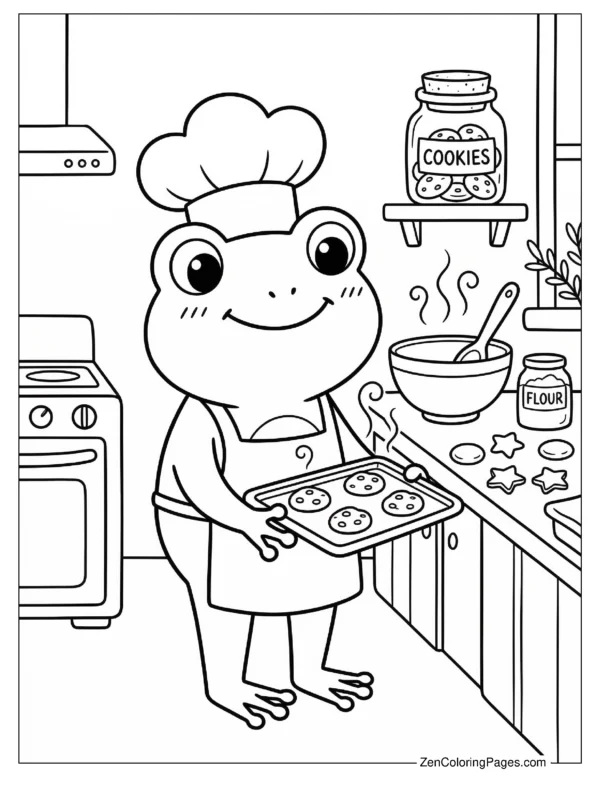
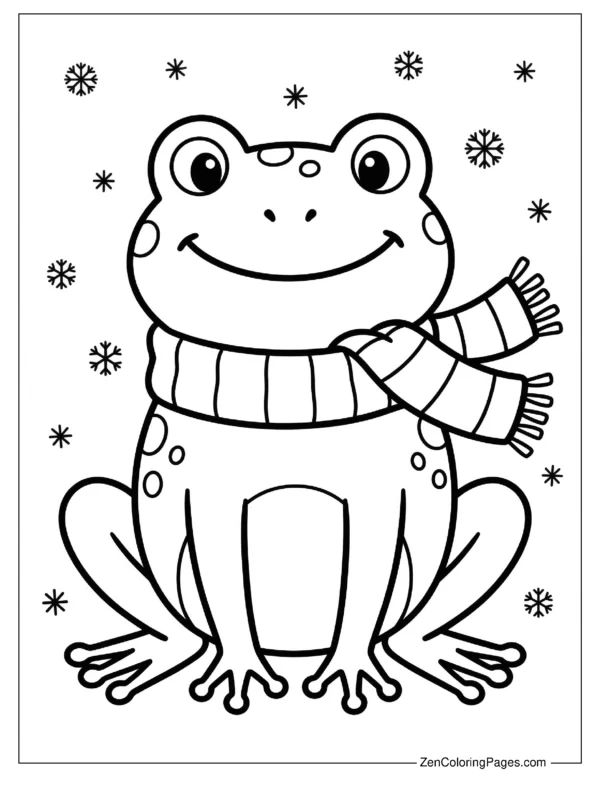
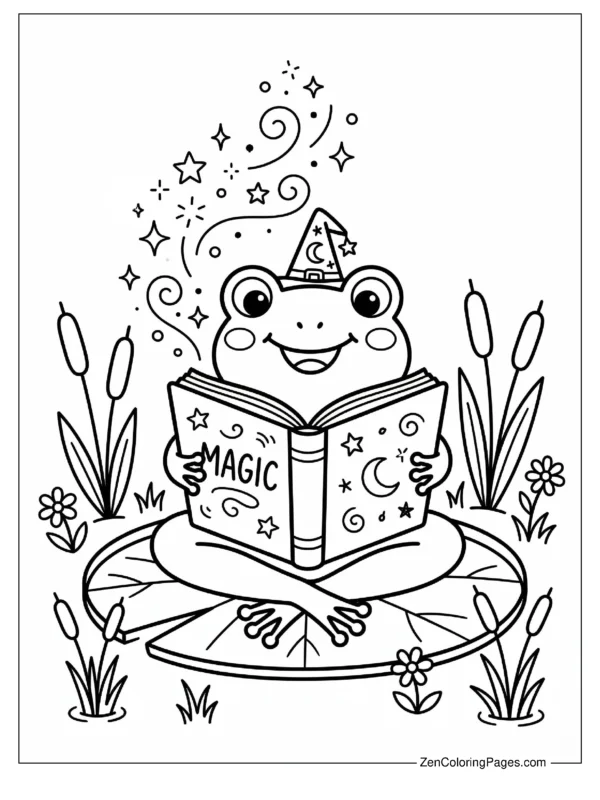
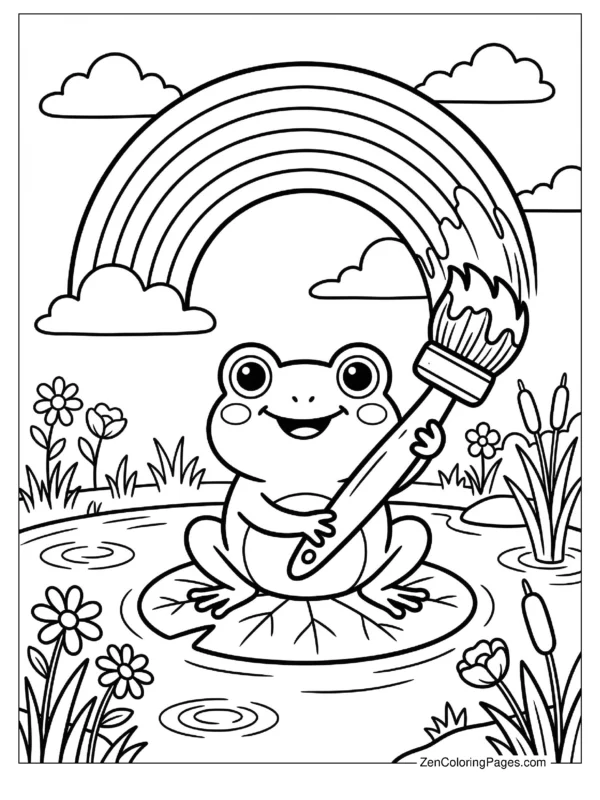
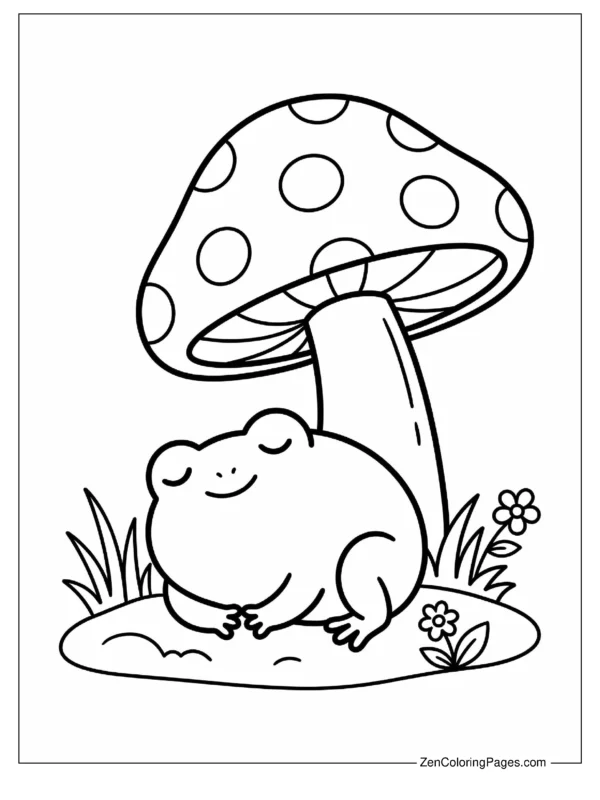
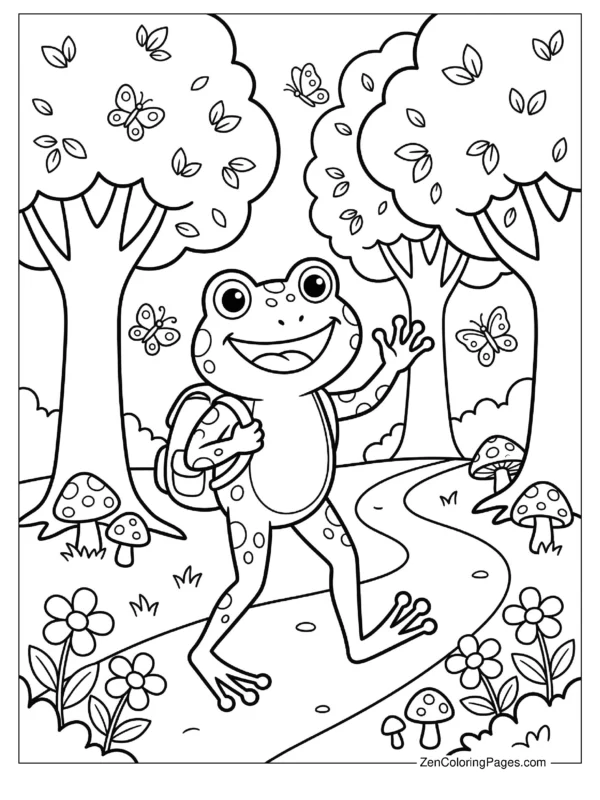
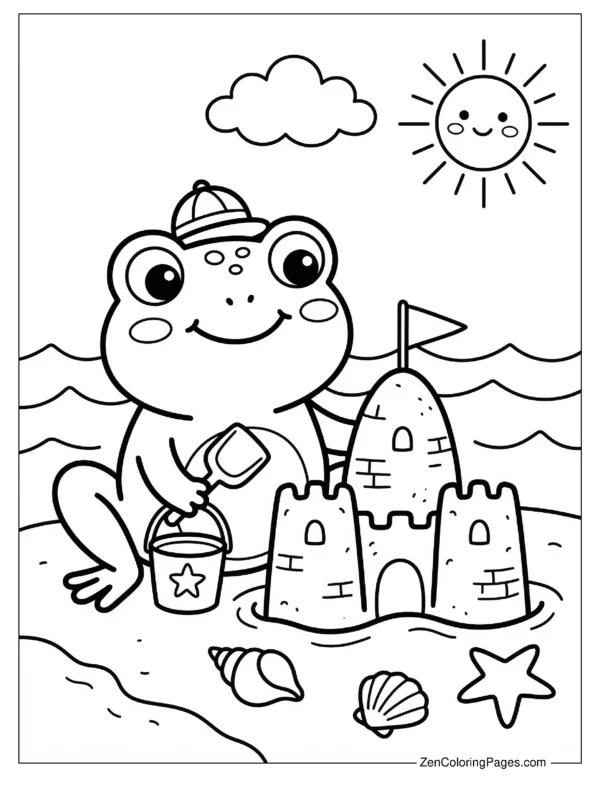
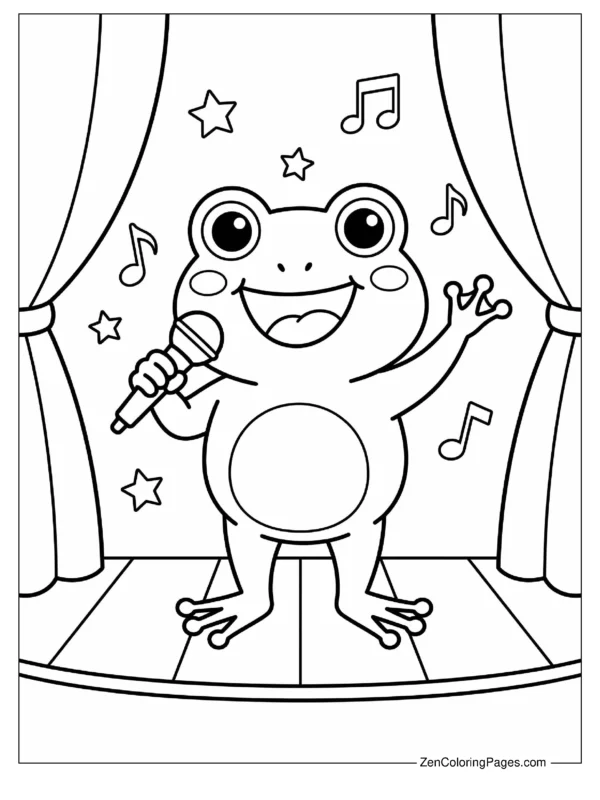
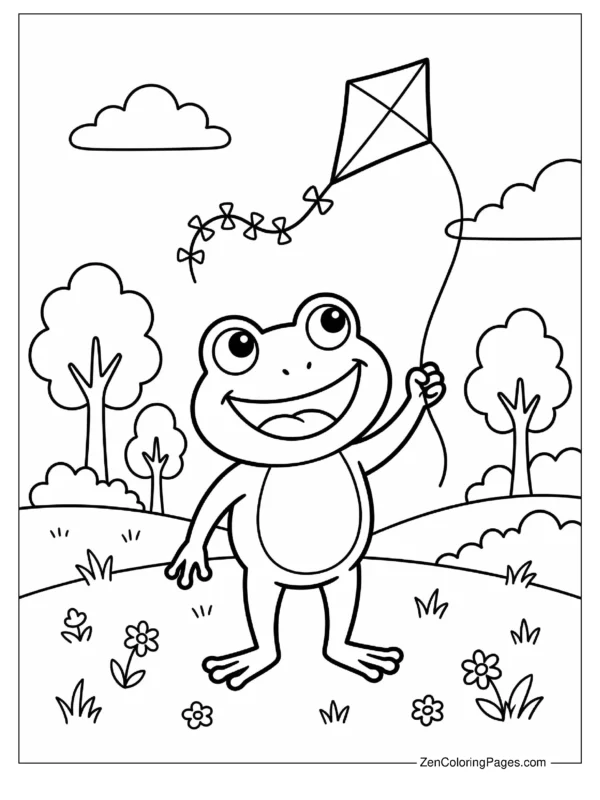
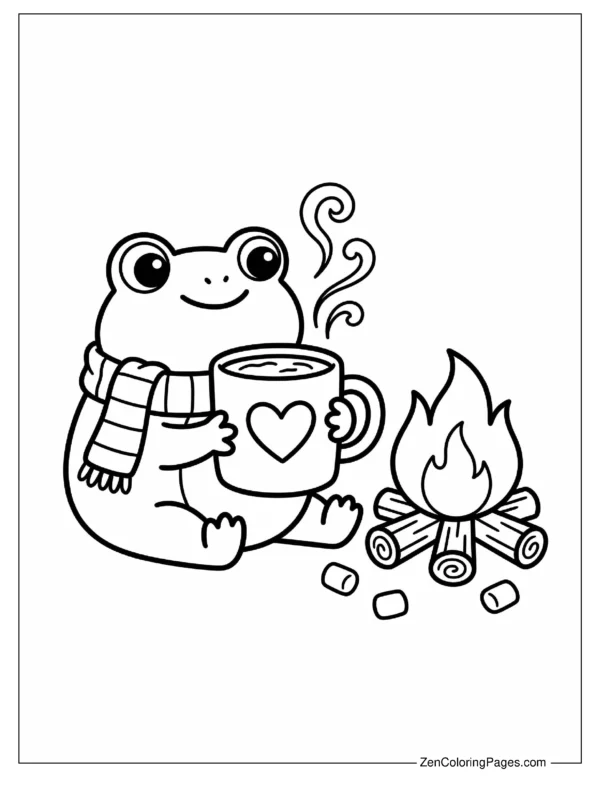
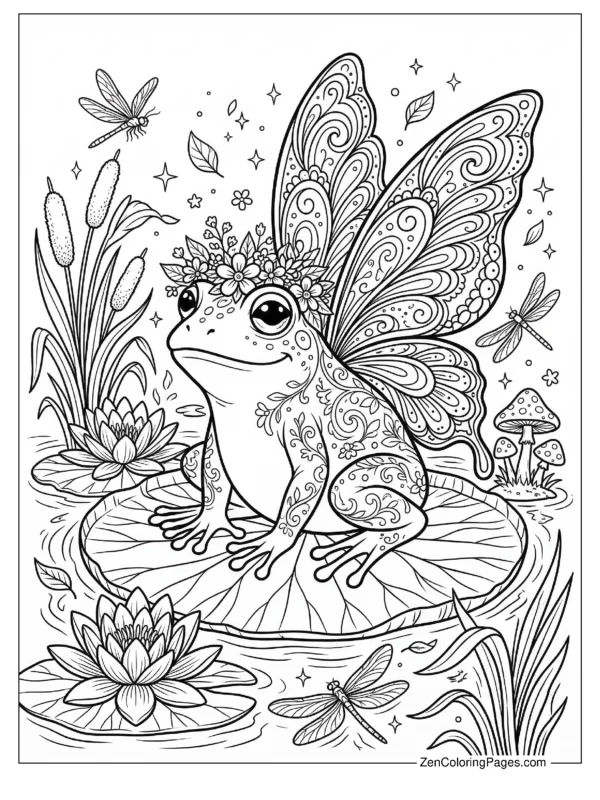
Frog coloring pages bring one of nature’s most fascinating amphibians right to your fingertips, ready to be filled with color and creativity. Whether you are looking for cute frog coloring pages featuring kawaii designs or realistic frog coloring pages that capture every detail of a tree frog or bullfrog, this collection has something for every age and skill level. All of our printable frog coloring pages are completely free to download, print, and enjoy at home or in the classroom.
From tiny tadpoles to full-grown pond dwellers sitting on lily pads, our frog coloring sheets cover a wide variety of species and scenes. Kids can explore the wonders of frog life cycle coloring pages, discover different frog breeds, or simply have fun with playful cartoon frogs. Each page features bold, clean outlines that make coloring easy and enjoyable for toddlers, preschoolers, and older children alike.
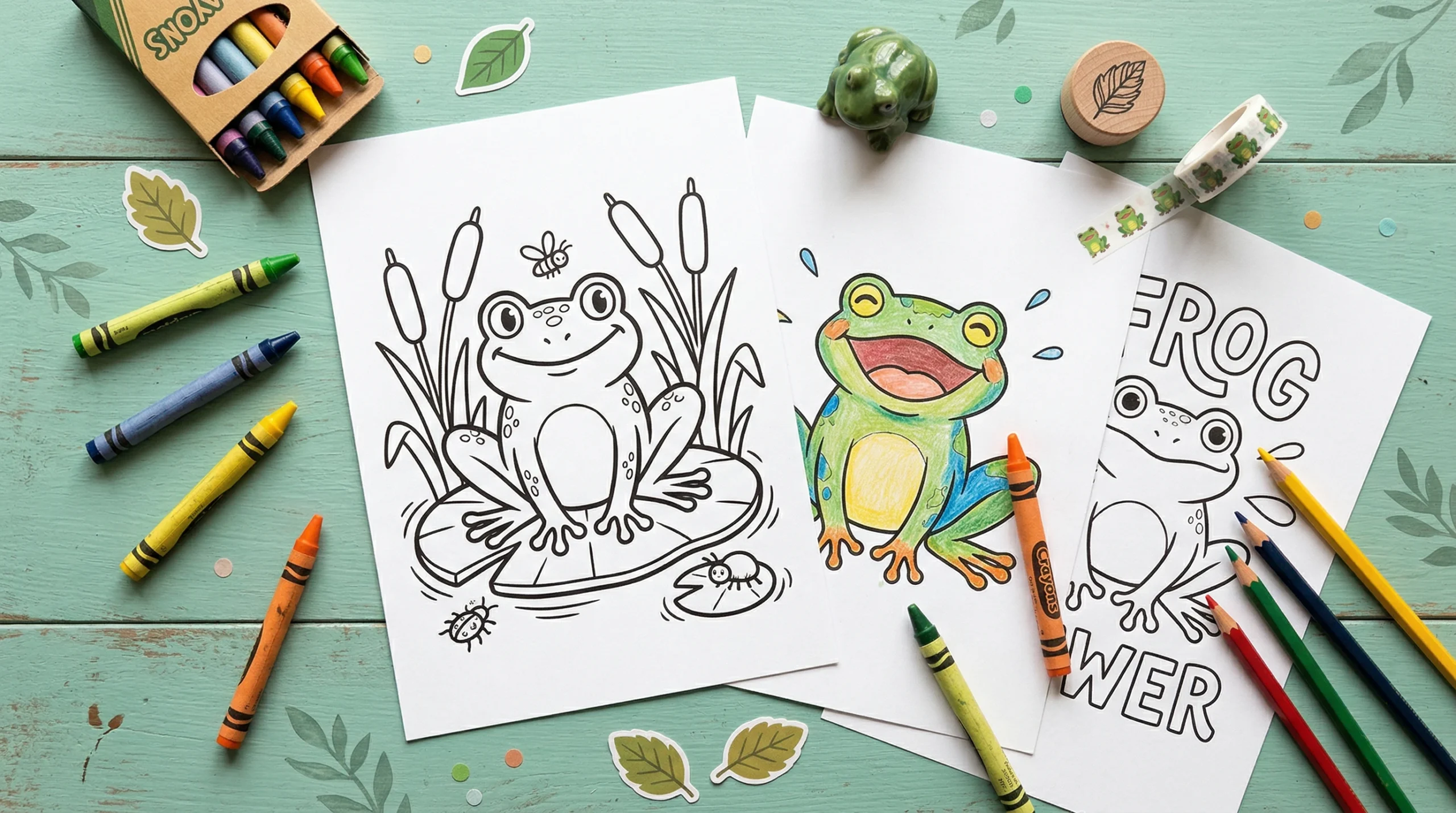
These frog coloring pages for kids are perfect for rainy day activities, science lessons, or a relaxing creative session after school. Teachers and homeschool parents love using them as educational supplements, while adults can enjoy the more detailed designs as a calming hobby. Simply pick your favorite, download the PDF, and start coloring your very own frog adventure today.
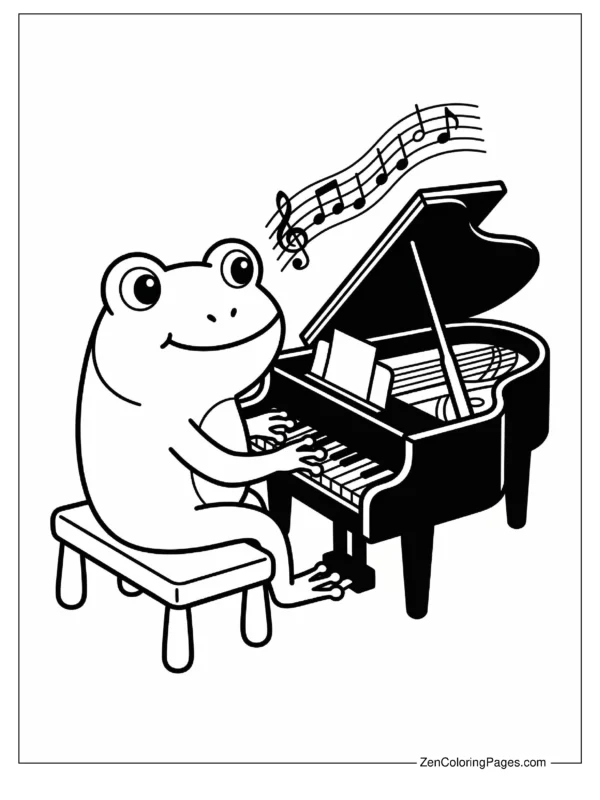
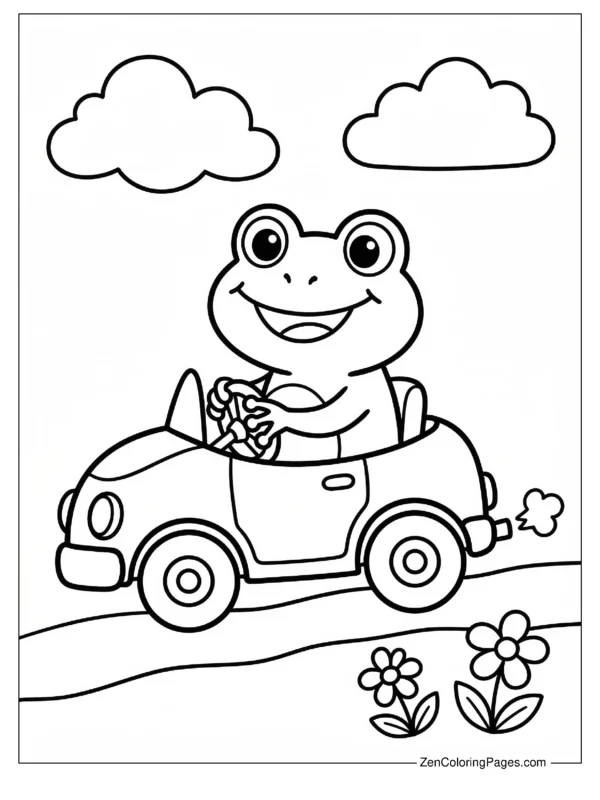

The Amazing Frog Life Cycle: From Egg to Adult
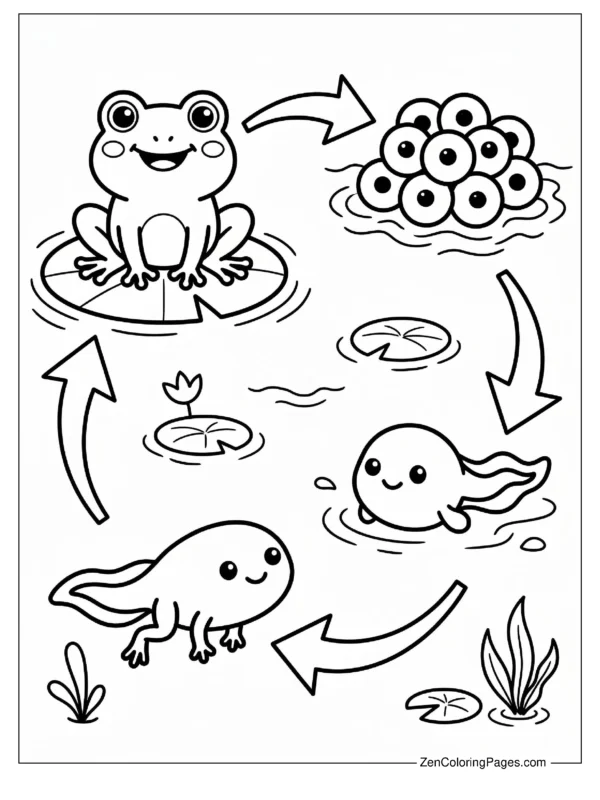
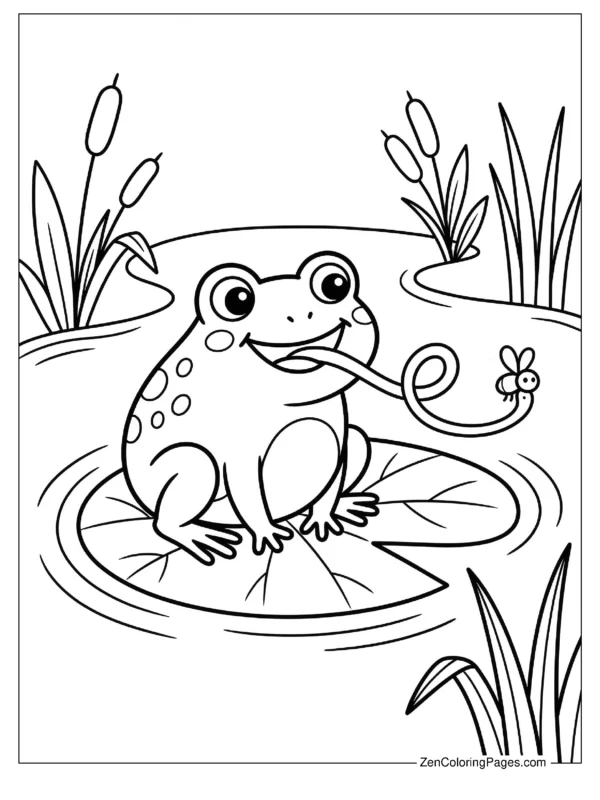
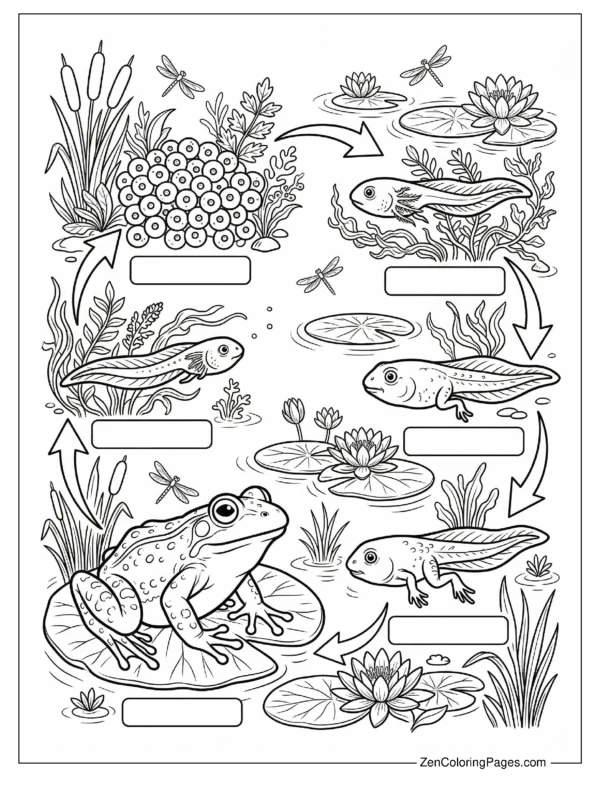
This is where frog coloring pages go from fun activity to genuine science lesson. The frog life cycle is one of the most remarkable transformations in the animal kingdom — a creature that begins as a squishy blob of jelly and eventually jumps across land catching flies with a sticky tongue. The entire process is called metamorphosis, a dramatic change from one body form into a completely different one.
The Four Stages Kids Should Know
Every frog goes through four main stages, and each one looks completely different from the last. It starts with an egg cluster. Female frogs lay hundreds (sometimes thousands) of eggs at once, and they float together in a jelly-like mass on the surface of a pond. Think of it like a clump of tiny clear bubbles, each with a dark little dot inside. Our Easy Frog Life Cycle Eggs To Color page is perfect for this stage because kids can see exactly what frogspawn looks like up close.
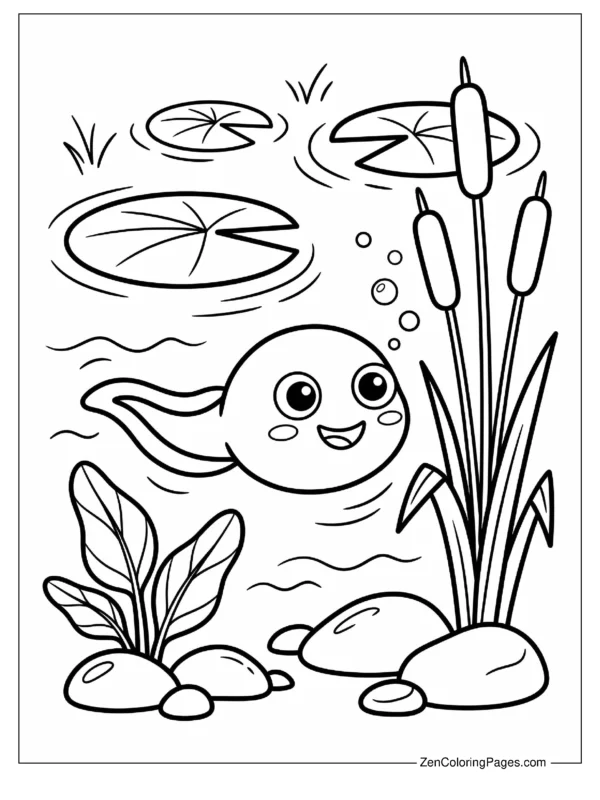
Next comes the tadpole stage — and this is what blows kids’ minds: tadpoles look nothing like frogs. They’re essentially little fish. No legs, a long tail, and they breathe underwater through gills. They munch on algae and tiny plants, swimming around the pond with no apparent plans to ever live on land. The Simple Tadpole Swimming In A Pond Coloring Sheet captures this stage beautifully.
Then things get fascinating. The tadpole starts growing back legs first, then front legs emerge elbow-first. Its body absorbs the tail from the inside, actually using those nutrients as fuel during the change. So the tail doesn’t fall off like a lizard’s — it slowly shrinks and disappears over the course of several weeks. At this point you’ve got a froglet, an adorable little creature with legs and a stubby tail still hanging on.
Finally, the adult frog emerges. Lungs have replaced gills. The tail is completely gone. The skull has literally changed from cartilage (the same flexible material as your nose and ears) to solid bone. Its diet has also flipped from plant-eater to insect-hunter. The whole process takes roughly 12 to 16 weeks for most species, making it one of the most dramatic visible transformations in nature. According to Wikipedia, there are over 7,700 frog species worldwide, and nearly all of them go through this same incredible journey.
Turn It Into a Hands-On Science Activity
Here’s where this collection becomes especially valuable for parents and teachers. Our frog coloring pages include dedicated life cycle sheets so kids can color each stage separately and then arrange them in the correct sequence. It’s a printable biology lesson wrapped in an art activity.
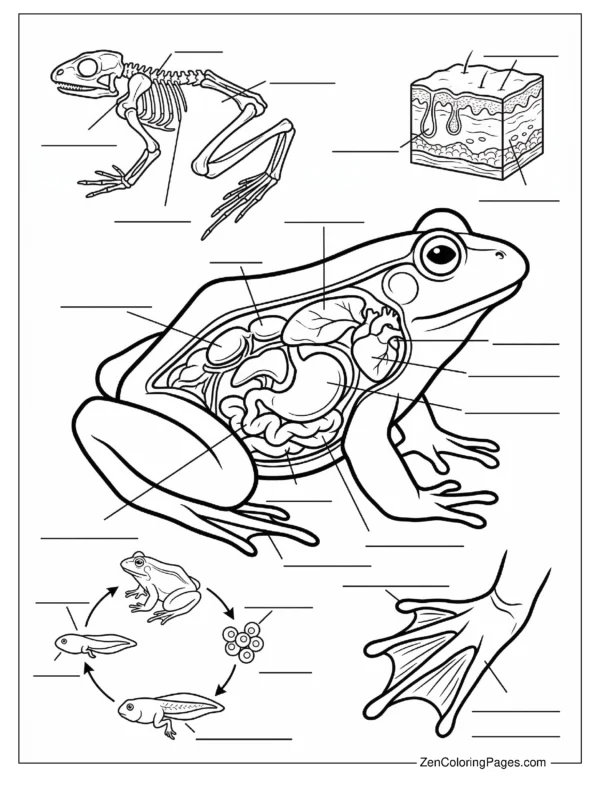
If you’re a teacher or homeschool parent, try pairing the Easy Frog Life Cycle Eggs To Color page with the Detailed Frog Life Cycle Diagram Printable Sheet. The first one is simple enough for younger kids to handle independently, while the diagram version gives older students a more complete picture with all four stages labeled. Use them together and you’ve got a solid two-part lesson that covers the science without feeling like a worksheet. For kids who want to go deeper, the Frog Anatomy And Biology Educational Diagram To Color adds another layer by showing what’s happening inside the frog’s body during each phase of metamorphosis.
I’ve had teachers message me saying they tape the colored stages to the wall in order, and kids reference them for weeks afterward. That kind of visual reinforcement sticks far longer than reading about it in a textbook.
Incredible Frog Species You Can Color
Beyond those life cycle stages, the real magic is in just how wildly different frog species look from each other. There are over 7,700 known frog species out there (according to Wikipedia), and honestly, some of them look like they were designed by a fantasy artist. I included several real species in this collection because kids deserve to see what nature actually came up with. It’s wilder than anything I could make up.
Red-Eyed Tree Frog
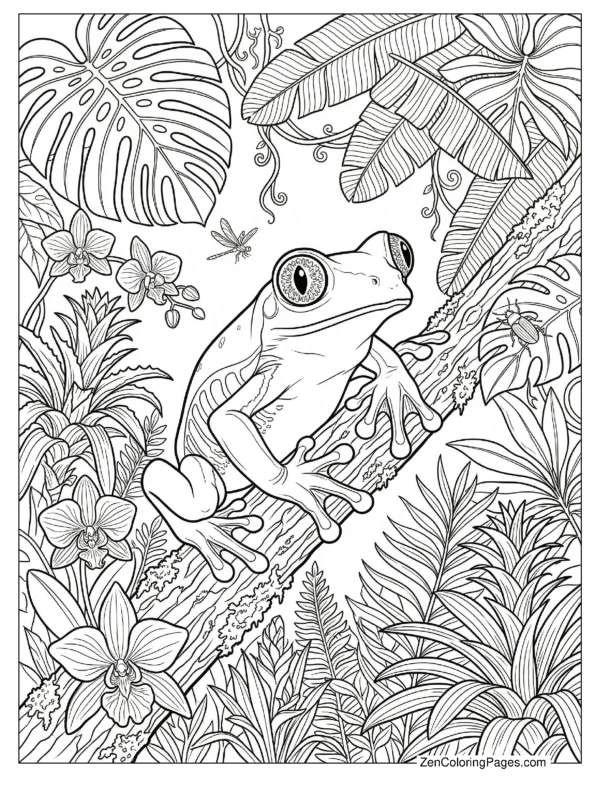
This is the one most people picture when they think “tropical frog.” Bright green body, vivid blue-and-orange striped sides, and those massive red eyes. The Detailed Red Eyed Tree Frog In Jungle Printable in our collection captures all that detail, and it’s a seriously fun coloring challenge. Here’s what’s cool: those flashy colors aren’t just for looks. When a predator gets close, the frog opens its eyes suddenly, and that burst of red startles the predator just long enough for the frog to escape. So those red eyes your kid is coloring? They’re basically a built-in alarm system.
Poison Dart Frog
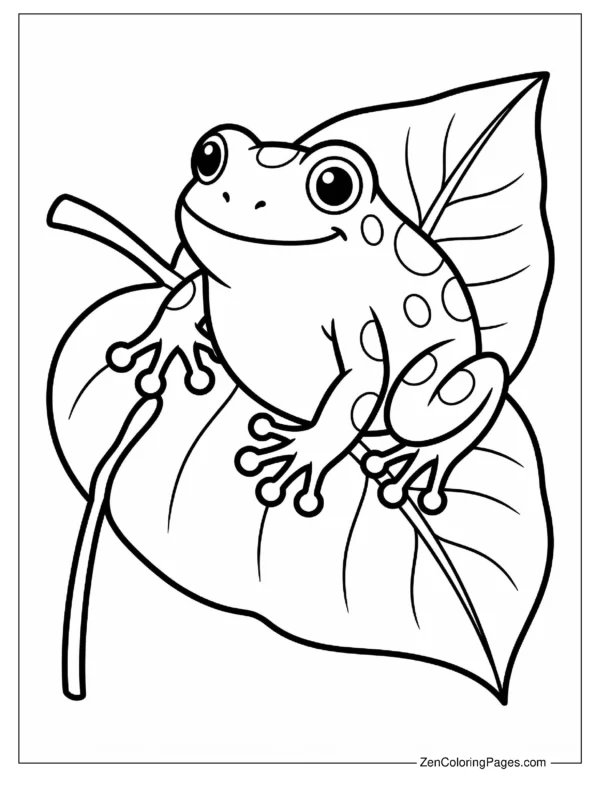
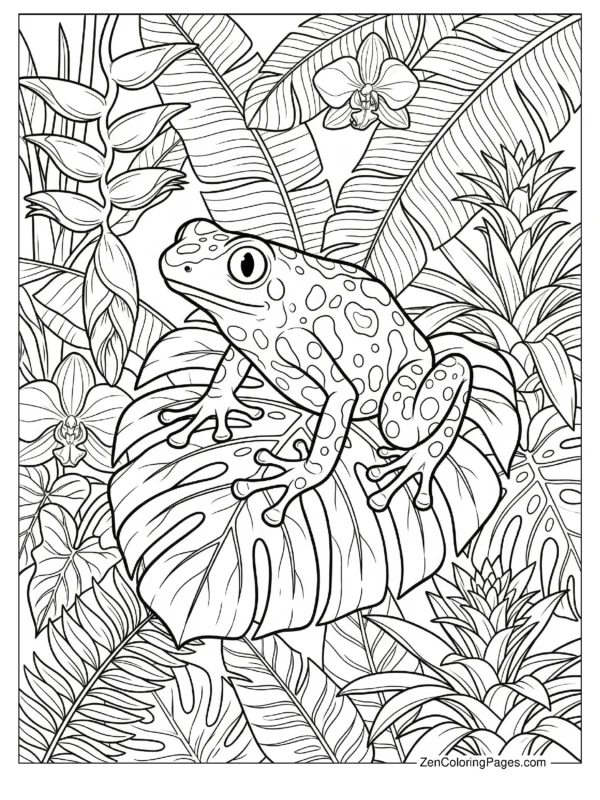
These tiny guys (only about one inch long) are some of the most colorful animals on the planet. Bright yellows, electric blues, fiery oranges and reds, all with contrasting black markings. We’ve got both a Simple Poison Dart Frog Sitting On A Leaf for younger kids and a Detailed Poison Dart Frog On Tropical Leaves for anyone who wants more of a challenge.
The fun fact I always share with kids: scientists believe poison dart frogs get their toxicity from the insects they eat, particularly tiny beetles. Frogs raised in captivity on a different diet aren’t actually poisonous at all. So when your kid picks some wild, unexpected color combination for their poison dart frog? Tell them it could totally be scientifically plausible. A frog eating different bugs in a different rainforest might genuinely look like that. The golden poison dart frog alone has enough toxin to take out 20,000 mice. One inch long. Nature is unreal.
Glass Frog
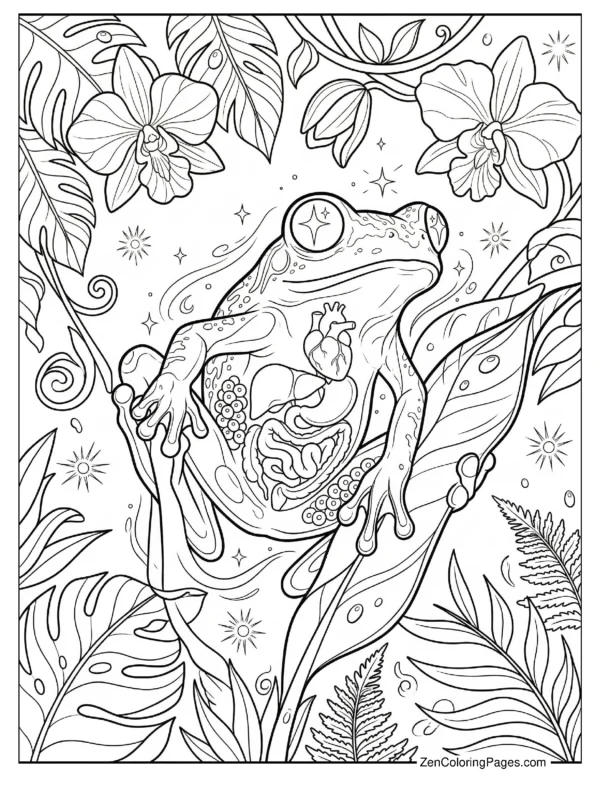
This one blows kids’ minds every single time. Glass frogs have translucent skin on their bellies, and you can literally see their beating heart, their liver, and their digestive system right through their body. They’re lime green on top for camouflage on rainforest leaves, but flip them over and it’s like looking at a living X-ray. The Mystical Glass Frog Showing Internal Organs Coloring Page is one of the most unique pages in this entire collection. I haven’t seen any other coloring site offer anything like it.
It gets even stranger. Research from the National Institutes of Health found that when glass frogs sleep, they hide almost 90% of their red blood cells inside their liver, making themselves two to three times more transparent. They essentially activate an invisibility mode while napping. Scientists are studying this mechanism because it could help us understand blood clotting disorders in humans. Pretty incredible for a frog that fits on your thumb. Kids who love this kind of magical, almost otherworldly creature design might also enjoy our fairy coloring pages collection, which has a similar sense of wonder.
American Bullfrog
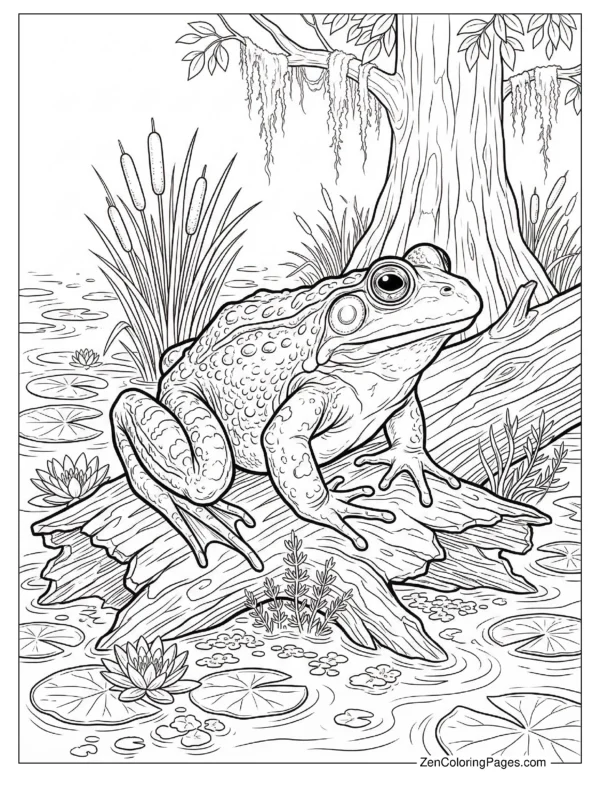
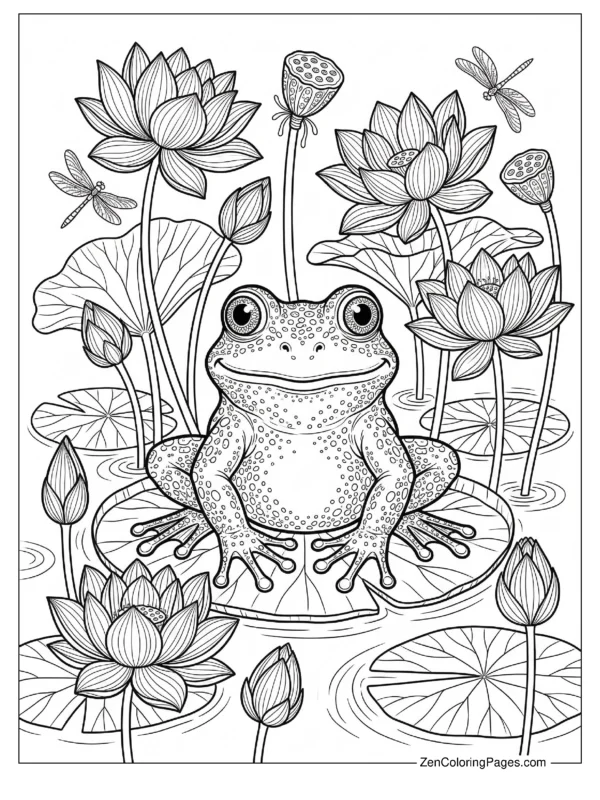
If the glass frog is the science fiction entry, the American bullfrog is the heavyweight champion. It’s the largest frog in North America, and its deep, booming call can be heard up to a mile away. The Realistic Bullfrog Sitting In A Swamp Coloring Page shows it in its natural habitat, all stocky and powerful looking. Kids who like realistic animal coloring tend to gravitate toward this one.
Amazonian Horned Frog
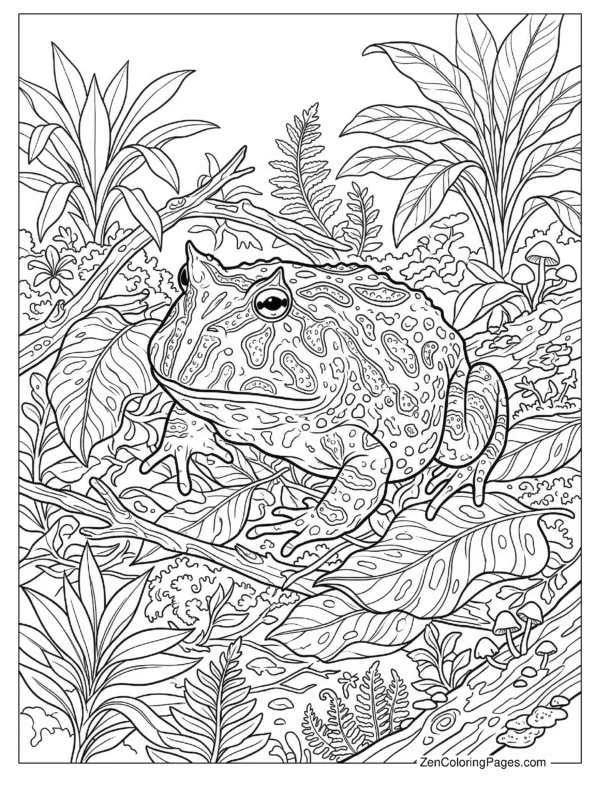
This is the master of disguise. The Amazonian horned frog has horn-like projections above its eyes and a body shape that looks exactly like a dead leaf on the forest floor. It sits completely still, blending into the leaf litter, waiting for prey to walk right past its mouth. The Detailed Amazonian Horned Frog Camouflaged Printable Sheet captures all those leaf-like textures, and it’s a really satisfying page to color because there’s so much going on in the camouflage pattern work.
Where Do All These Frogs Live?
Frogs live on every continent except Antarctica. Rainforests, deserts, mountains, even underground. Some species are adapted for burrowing, others spend their entire lives in trees. That diversity is part of what makes frog coloring pages so interesting — you can color a swamp scene, a tropical canopy, or a mountain stream and all of them are accurate frog habitats.
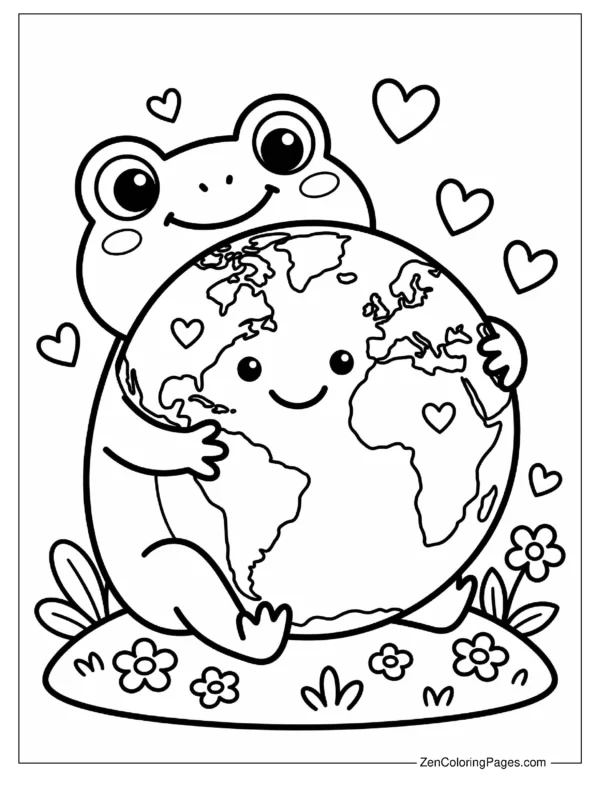
But here’s the part that’s harder to talk about. More than one-third of frog species are now threatened with extinction, and over 120 species have disappeared since the 1980s. A fungal disease called chytridiomycosis has caused dramatic declines in at least 501 amphibian species across more than 60 countries, according to the Smithsonian’s National Zoo. Combined with habitat loss, it’s a genuine crisis. The Cute Earth Day Frog Hugging Planet Coloring Sheet is honestly a great conversation starter for this. It’s gentle enough for young kids but opens the door to talking about why these amazing animals need our help.
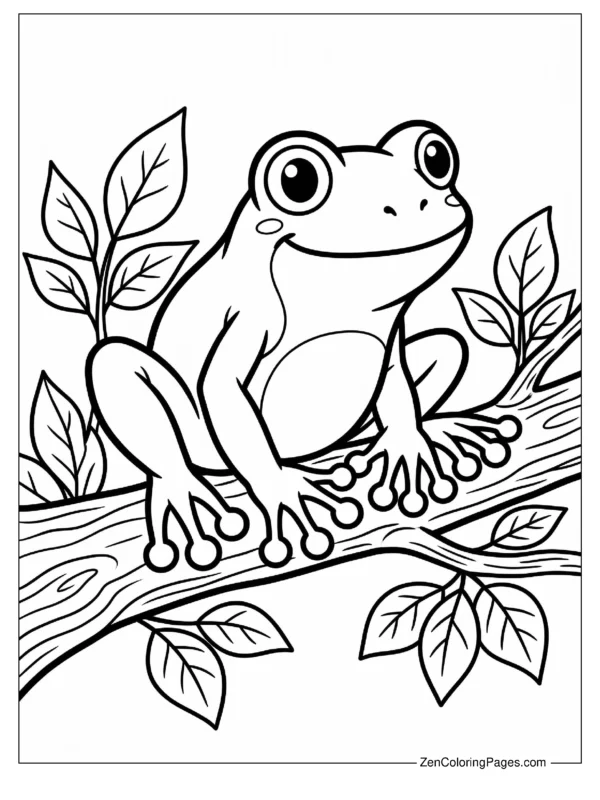
One last thing: I always encourage kids to look up reference photos of these species before coloring. Seeing a real glass frog or a real poison dart frog is genuinely mind-blowing, and it helps them make more intentional color choices. But if they’d rather invent their own fantasy frog species using the detailed designs? That’s awesome too. There’s no wrong way to do it. The Simple Green Tree Frog On A Branch Printable is a great starting point for anyone who wants to experiment with their own color schemes on a simpler design first.
Frog Coloring Tips: Techniques for Every Skill Level
Once you’ve picked your color scheme, the next question is how to actually bring these frog pages to life. The right tools and techniques make a noticeable difference. I’ve watched my niece go from frustrated scribbling to genuinely proud of her finished pages, and most of that progress came down to matching the right supplies to the right difficulty level.
Here’s what I’ve learned after years of testing different approaches across age groups.
Easy Pages (Ages 3-7): Keep It Simple and Bold
For little kids, chunky crayons or thick washable markers are your best friends. Colored pencils at this age tend to cause frustration because the color payoff is too light for tiny hands that haven’t developed much pressure control yet. Research shows that fine motor skills develop rapidly around ages 4-5, so those fat crayons are doing real developmental work helping build hand strength and coordination.
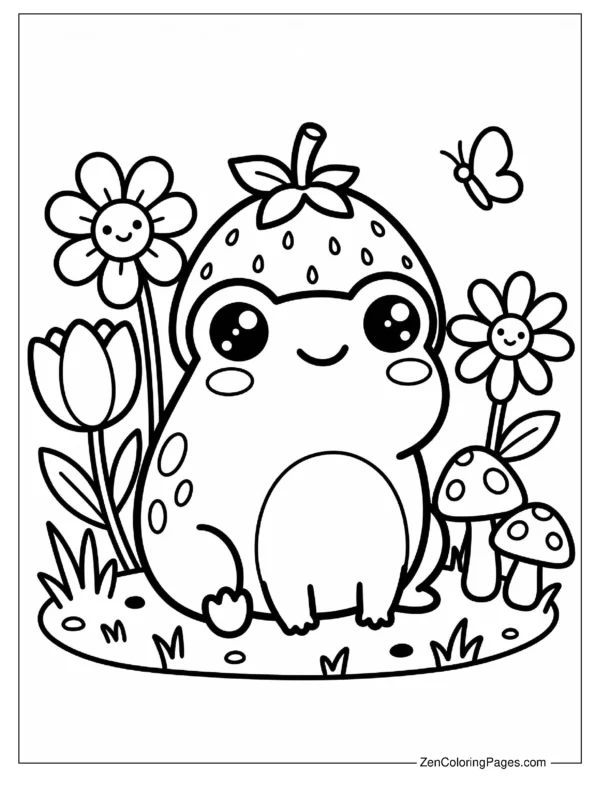
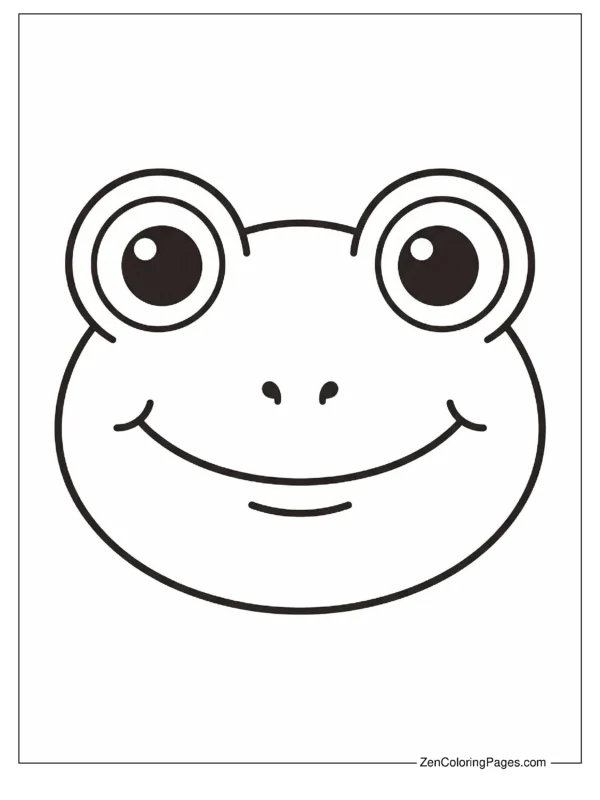
My go-to approach for younger kids? Start with the frog’s body in one solid green, then use a lighter shade or yellow for the belly. That’s it. Two colors and they’ve already got a frog that looks great. Pages like the Kawaii Frog Drinking Boba Tea Printable Coloring Page and the Simple Frog Face With Big Eyes Coloring Sheet look amazing with bold, flat colors. No blending needed, no stress — just solid blocks of bright color, and kids feel like real artists.
Medium Pages (Ages 8-12 and Teens): Time to Layer
This is where colored pencils become genuinely transformative. Kids in this age range can handle the lighter touch required, and pencils allow something markers simply can’t — gradual blending.
Here’s a simple layering technique that works beautifully on frog pages. Start with a yellow-green as your base layer, using light pressure so you don’t flatten the paper’s texture. Then go over the top with a darker green, pressing a little harder in the shadow areas — under the chin, along the legs, across the back. The yellow-green peeks through underneath and gives the skin a natural depth that a single green shade can’t achieve. The order matters here, too. Yellow-green under dark green produces a completely different effect than the reverse, so experiment a little.
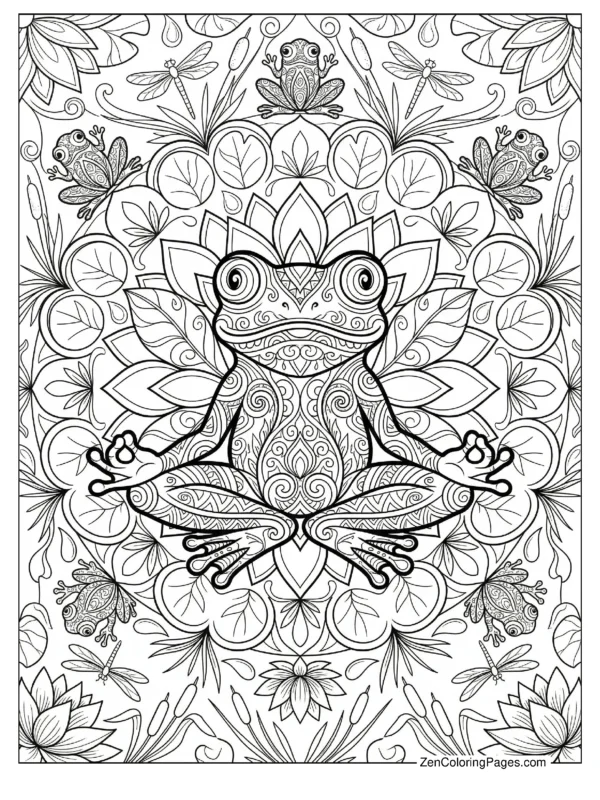
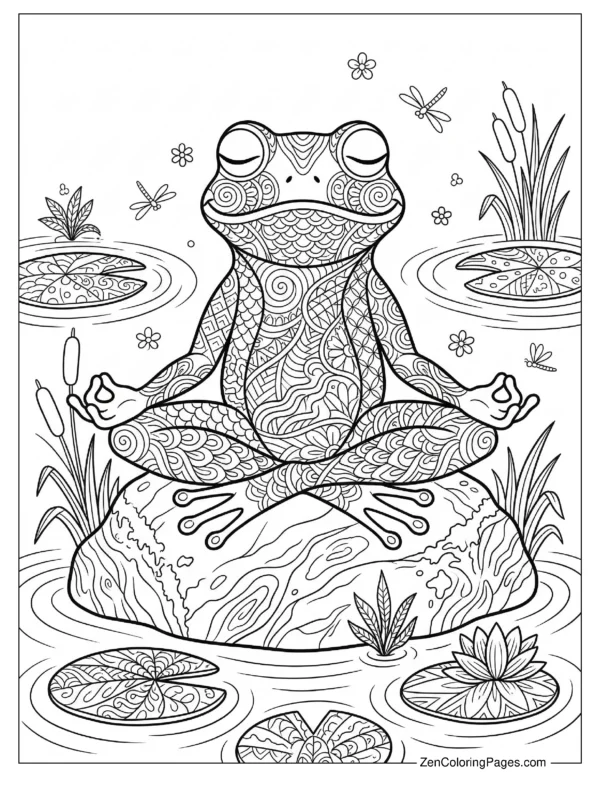
One trick that makes a substantial difference on pages like the Detailed Red Eyed Tree Frog In Jungle Printable: leave a tiny dot of white paper showing in each eye, or use a white colored pencil to add that shine spot. It instantly makes the frog look alive. The Zentangle Frog Meditating On A Rock Coloring Page and the Intricate Frog Mandala Design For Adults To Color are also perfect for practicing these blending skills because they have enough detail to keep things interesting without being overwhelming.
Detailed and Realistic Pages (Teens and Adults): Professional Techniques
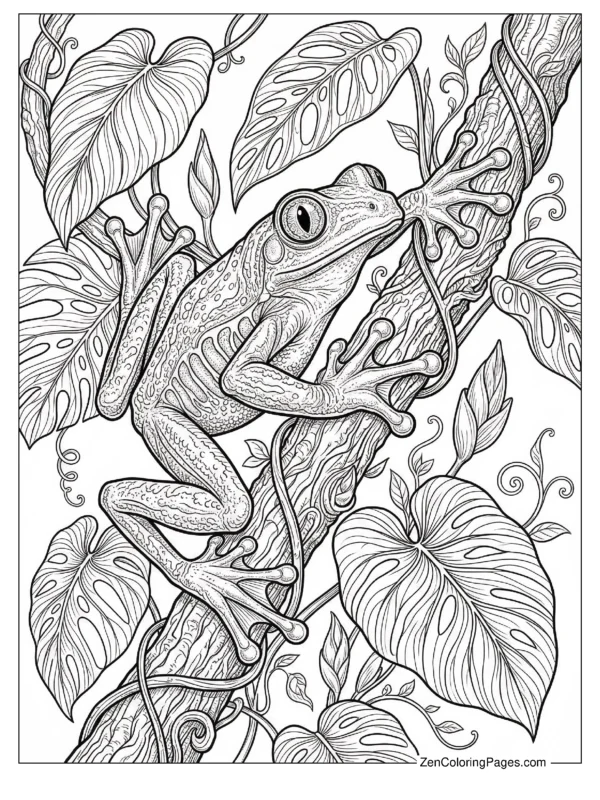
This is where things get genuinely exciting. For the more complex pages, fine-tip markers or watercolor pencils unlock techniques that simpler tools can’t match. The Realistic Tree Frog Climbing A Vine Coloring Page practically begs for this treatment.
The most important technique for realistic frog pages? Creating that wet, glossy skin texture. Here’s how: as you’re coloring the frog’s back and legs, intentionally leave small white highlights — little irregular spots where the paper shows through. This mimics how light reflects off a frog’s moist skin in real life. It sounds counterintuitive (leaving paper blank on purpose?) but the effect is striking.
I’d also strongly recommend pulling up a reference photo of the actual species while you color. The red-eyed tree frog, for example, has those vivid blue and yellow striped sides that most people don’t even know about until they see a photo. Having that reference next to you while working on the Detailed Red Eyed Tree Frog In Jungle Printable takes the result from good to genuinely stunning.
Your Frog Color Palette Cheat Sheet
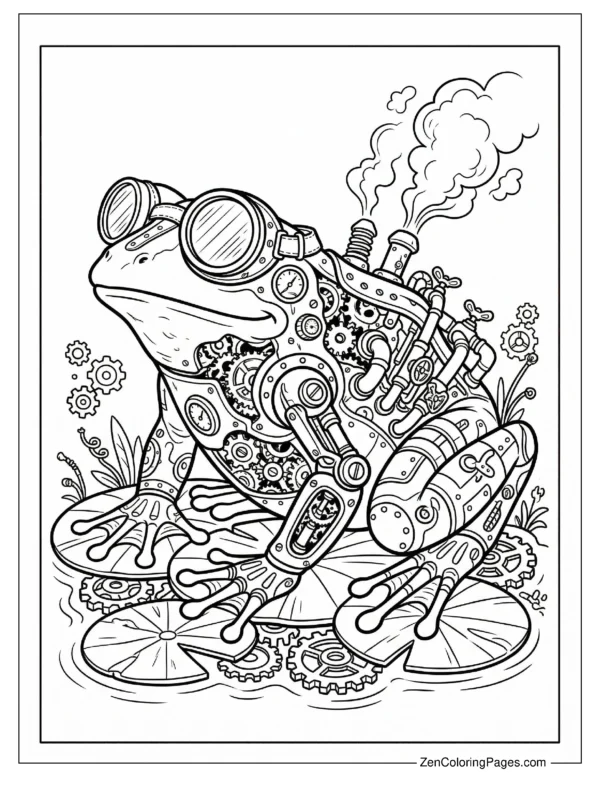
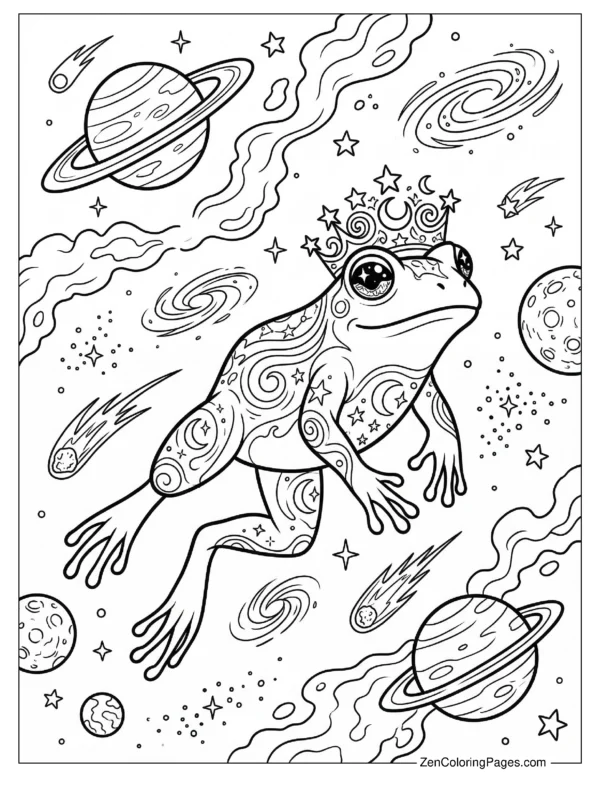
Most frogs are some combination of greens, yellows, and browns — that’s your safe starting point. But don’t stop there. Poison dart frogs use electric blues, fiery reds, and bright oranges, which is why pages like the Detailed Poison Dart Frog On Tropical Leaves are so satisfying to color. If you want to warm up your blending skills before tackling those detailed frog species, practicing with our rainbow coloring pages is a great way to build confidence with vibrant color transitions. For the fantasy pages, literally anything goes. The Cosmic Frog Floating Through A Galaxy Coloring Page looks incredible in purples and teals, and the Steampunk Mechanical Frog With Gears And Goggles is perfect for metallics, coppers, and brass tones. No rules on those — go wild.
Don’t Forget the Background
One thing I see people skip constantly is the background, and it can completely change the mood of a finished piece. Try a light blue watercolor wash behind pond scenes, or soft greens for jungle pages like the tree frog printables. For the Cosmic Frog Floating Through A Galaxy Coloring Page, a dark purple or black background makes those bright frog colors absolutely pop. Even a simple color wash behind the frog elevates the result from “coloring page” to something you’d actually want to hang on the fridge — or frame. No judgment either way.
Creative Ways to Use Frog Coloring Pages at Home and School
Once you’ve picked up some coloring techniques, it’s time to think about what to actually DO with all these frog pages. Coloring is just the starting point. Teachers regularly look for ways to tie coloring into their lesson plans, and parents want activities that go beyond simply filling in shapes. Here are some of the most effective ways to put these pages to work across different settings.
Pair Them With a Science Unit
This one’s a natural fit for classrooms and homeschool families. Print out the Easy Frog Life Cycle Eggs To Color and the Detailed Frog Life Cycle Diagram Printable Sheet, have students color each stage, then cut them out and arrange them on a poster board with arrows showing the transformation sequence. Since tadpoles go through approximately 14 weeks of metamorphosis — growing back legs first, then front legs, losing their tail, and developing lungs — there’s plenty to label and discuss at every stage. It pairs perfectly with a tadpole observation jar if your classroom has one. Kids get far more invested in watching the real thing when they’ve already colored every stage of the process.
Build a Year-Round Bulletin Board
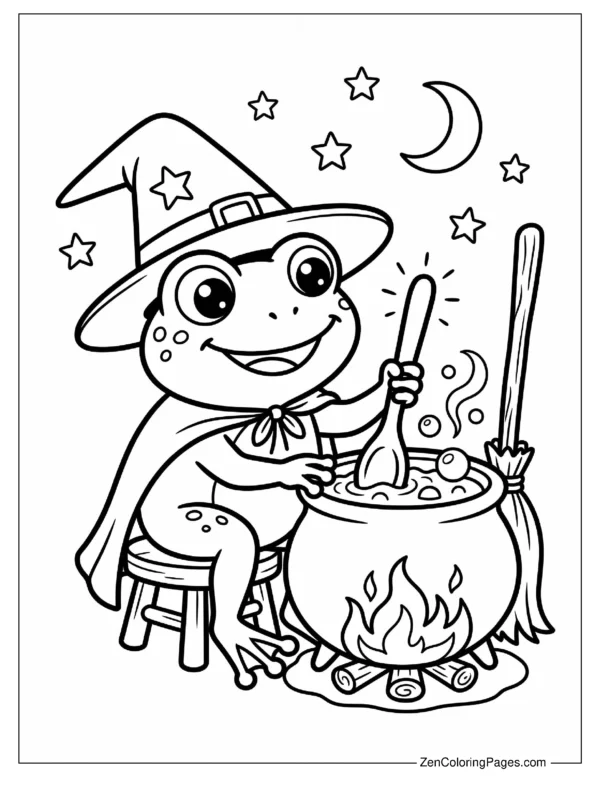
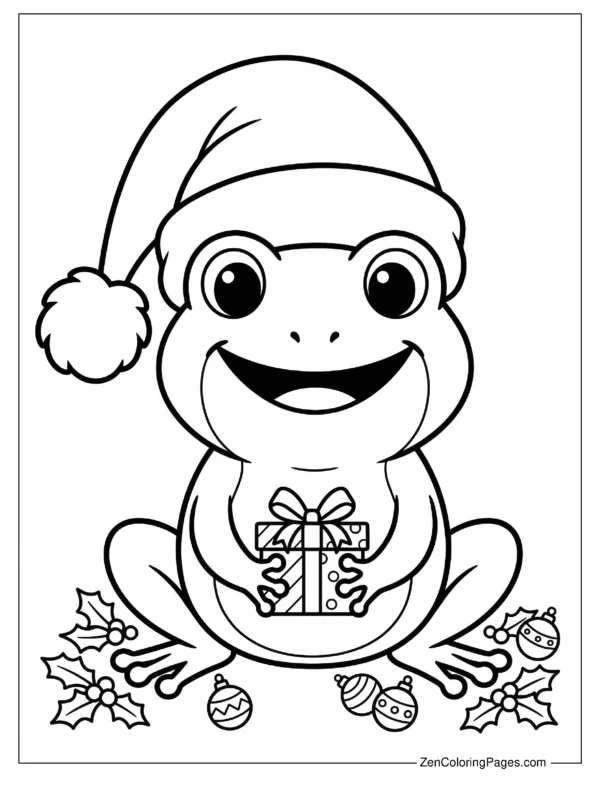
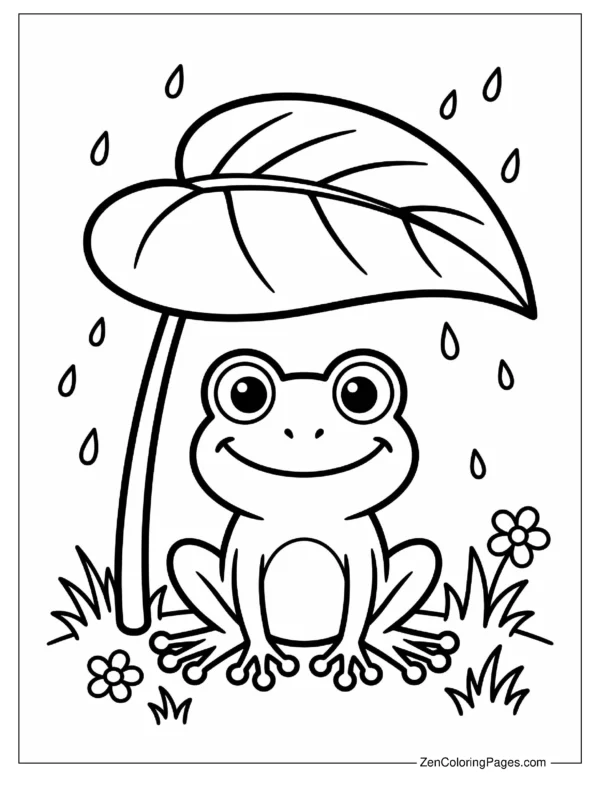
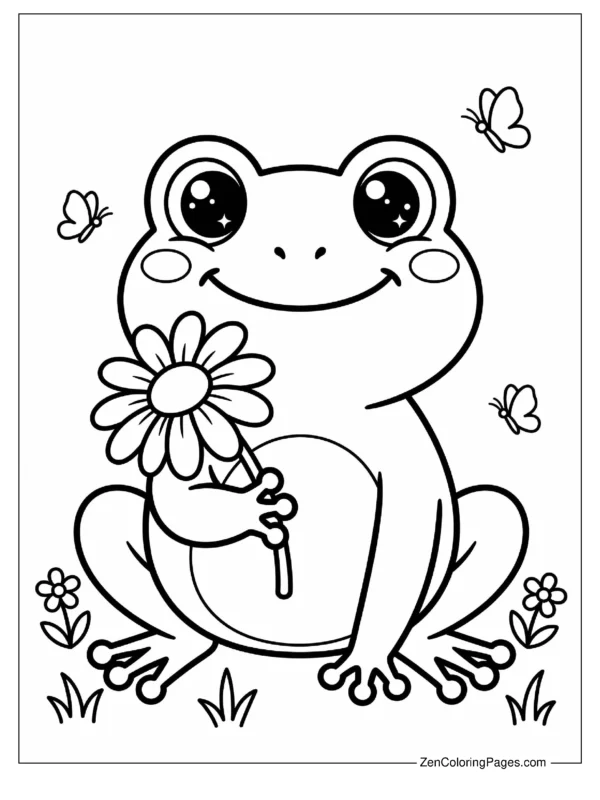
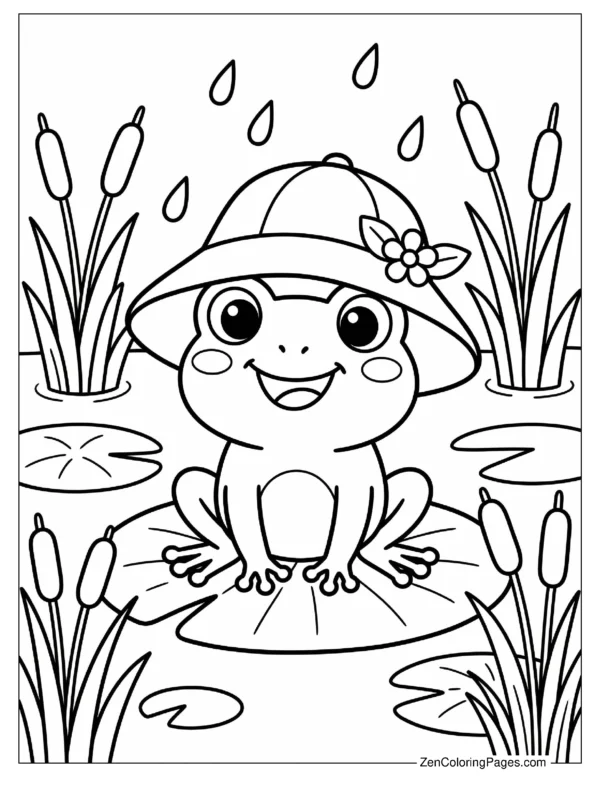
This approach works surprisingly well for rotating classroom displays throughout the school year. Start with the Cute Frog Holding A Spring Flower Coloring Page in March, switch to the Adorable Frog Wearing A Rain Hat Coloring Sheet for April showers, bring out the Cute Earth Day Frog Hugging Planet Coloring Sheet for Earth Day, then the Spooky Witch Frog Stirring A Cauldron Coloring Page for October, and finish with the Merry Christmas Frog Wearing Santa Hat To Color in December. Same character, different seasonal vibes. Kids love the continuity of following one animal through the year, and it takes basically zero prep since the coloring IS the decorating.
Storytelling and Creative Writing Prompts
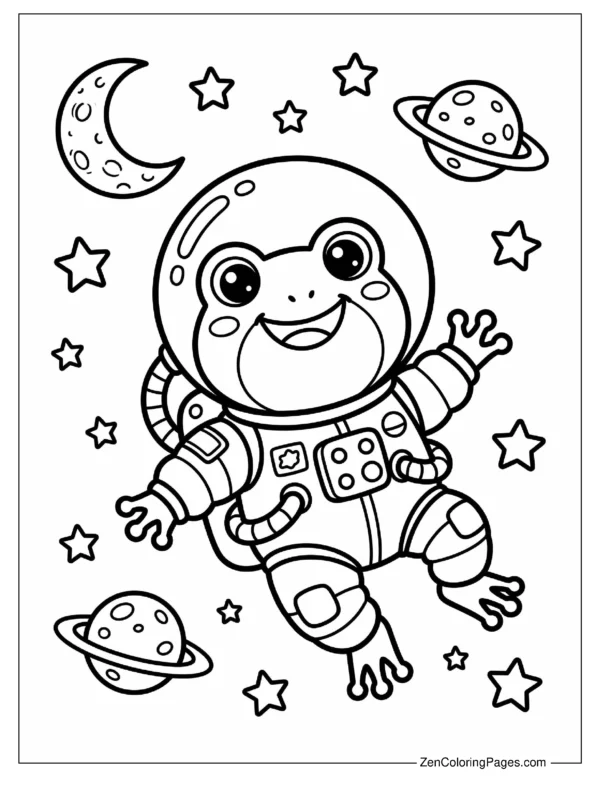
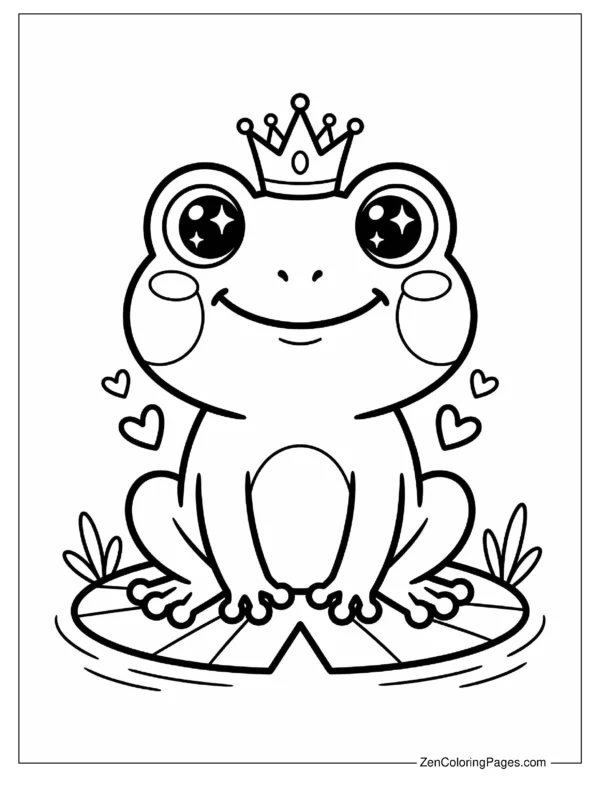
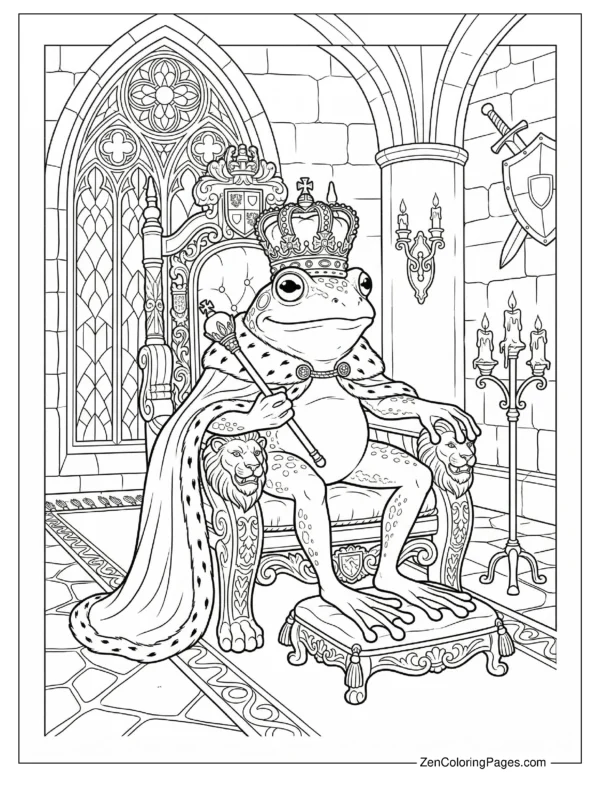
This is one of the most versatile activities in the collection. Have kids color one of the character frog pages — the Cute Frog Astronaut Floating In Space Coloring Sheet, the Steampunk Mechanical Frog With Gears And Goggles, or the Cute Frog Prince With A Crown all work great — then write a short adventure story about their character. Where is the astronaut frog headed? What did the steampunk frog build? The coloring gives them a visual anchor for their narrative, which makes writing feel far less intimidating for kids who struggle with blank pages. If your children gravitate toward those imaginative character designs, our fantasy coloring pages collection has dozens more in that same creative vein.
Calm-Down Corner and Mindfulness Activity
The Zentangle Frog Meditating On A Rock Coloring Page and the Intricate Frog Mandala Design For Adults To Color are genuinely well-suited for calm-down corners in classrooms. The repetitive patterns in zentangle and mandala designs naturally slow breathing and focus attention for both children and adults. Research has shown that structured coloring activities help children process strong emotions in a secure way, building patience and self-regulation through focused, repetitive motion. At home, these detailed pages work beautifully as a screen-free wind-down activity before bedtime — a much calmer transition than another round of screen time.
Birthday Party Coloring Station
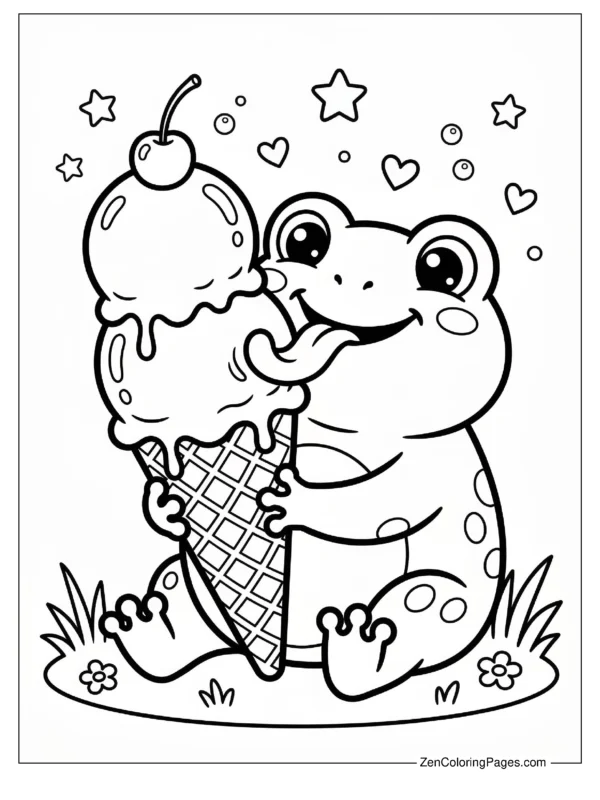
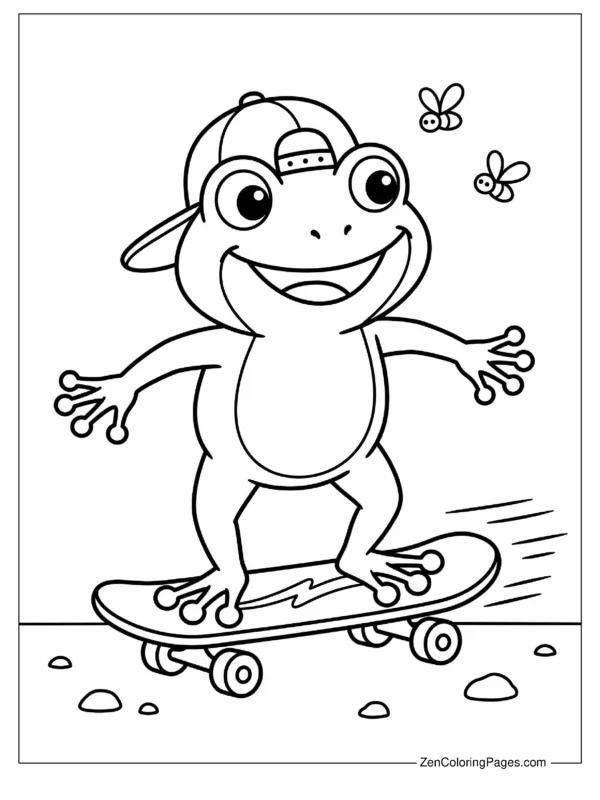
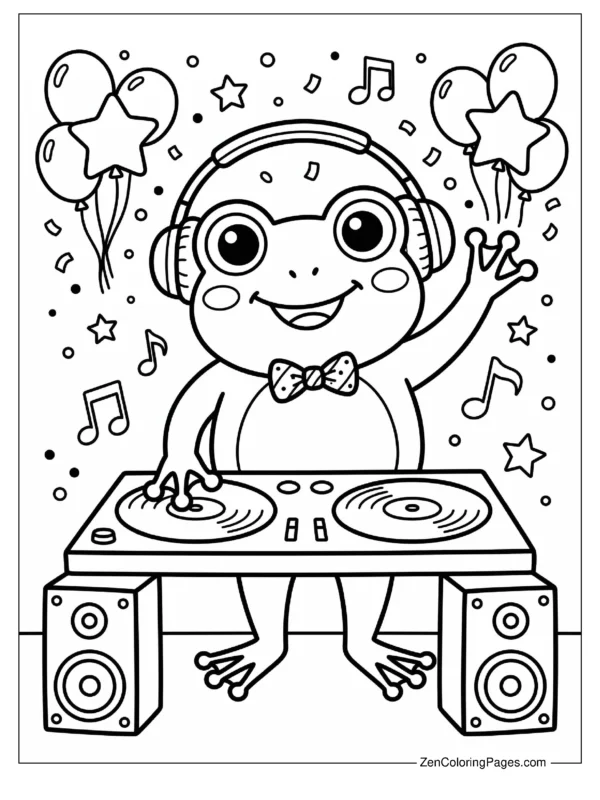
For a frog-themed birthday party — or honestly any gathering where you need a low-mess activity — print five or six of the kawaii and funny pages. The Cute Frog DJ Playing Music At A Party, the Funny Frog Riding A Skateboard Printable Coloring Page, and the Adorable Frog Eating A Giant Ice Cream Cone are consistently popular with kids. Set up a coloring station with crayons and markers, and each guest takes home their finished artwork as a party favor. It’s inexpensive, kids feel proud of something they made themselves, and cleanup takes about 30 seconds.