

These axolotl coloring pages might just teach your kids something wild: the real animal can regrow entire limbs, parts of its brain, and even its heart. Axolotls are basically real-life superheroes with regenerative abilities that scientists are still trying to fully understand — except fewer than 1,000 of them remain in the wild, making them critically endangered. That’s what drove me to create this collection of 40 free printable axolotl coloring pages. They’re not just cute (though they’re definitely cute). They’re a way for kids to connect with one of the most fascinating and threatened creatures on the planet through art.
So what’s actually in here? You’ve got 40 pages spanning everything from simple outlines for toddlers to detailed realistic designs for older kids and adults. The range is honestly pretty impressive. There’s a Kawaii Axolotl Eating A Strawberry Printable for the cute-obsessed crowd, an Endangered Mexican Axolotl In Xochimilco Canal page that doubles as a geography lesson, and an Axolotl Navigating A Sunken Pirate Ship for kids who want adventure with their coloring. I also included science-themed pages covering axolotl anatomy, their life cycle, and different color morphs — something I haven’t seen on any other coloring page site. Every single page is a free PDF download.
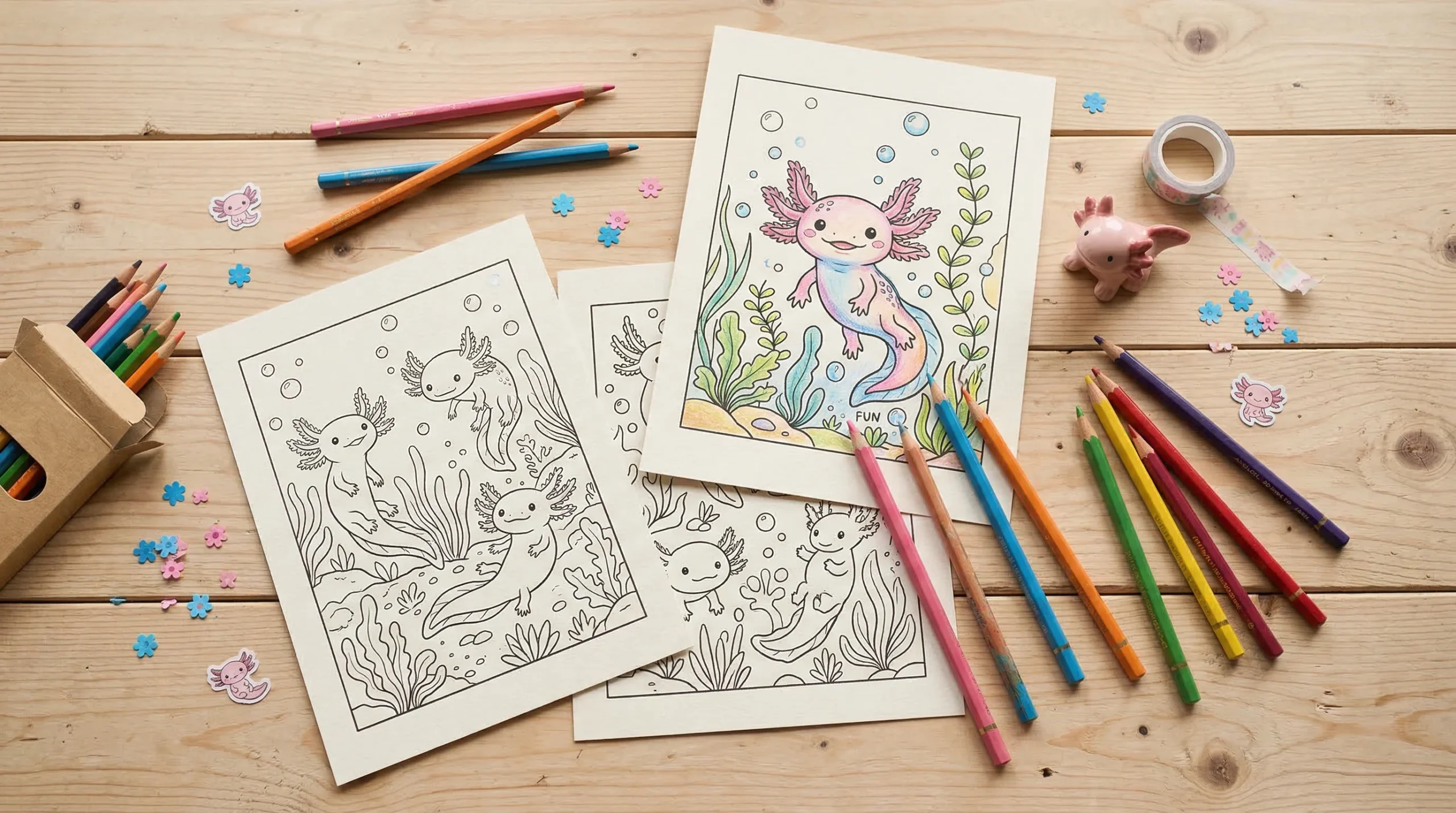
All the pages are sized for standard Letter and A4 paper, so just click, print, and go. The easy pages work great for ages 2 to 5 with big shapes, thick lines, and zero frustration, while the medium and detailed pages give kids 6 and up a real challenge. Teachers, these are solid for science classroom activities or a unit on amphibians and endangered species. Homeschool parents, the educational pages pair perfectly with a biology lesson. Teens and adults looking for stress-relief coloring will find plenty of detailed designs to sink into. And if you just need 30 minutes of quiet on a Saturday afternoon? The simpler pages handle that too.




Fascinating Axolotl Facts That Bring These Coloring Pages to Life
Axolotls aren’t just adorable smiling creatures that kids love to color. They’re some of the most scientifically fascinating animals on the planet, and learning a few real facts about them makes the coloring experience so much richer. Since axolotls are salamanders — a type of amphibian — kids who enjoy these pages might also want to explore our frog coloring pages for another amphibian collection.
They’re Critically Endangered (and That Matters)
Wild axolotls exist in only one place on Earth: the Xochimilco lake system near Mexico City. According to the IUCN Red List, the species is classified as Critically Endangered, with an estimated 50 to 1,000 adults remaining in the wild. The population crashed by over 99% between 1998 and 2014 due to pollution, habitat loss, and invasive fish species like tilapia that eat axolotl eggs.
That’s heartbreaking, but it’s also a powerful conversation starter with kids. Our Endangered Mexican Axolotl In Xochimilco Canal page works well for this because it shows the axolotl in its real habitat. You can talk about why these animals need protecting while your child is coloring. Scientists at Mexico’s National Autonomous University (UNAM) are working on breeding programs and restoring canal habitats, so there is genuine hope for recovery. Kids love hearing that part.
Regeneration Superpowers (Yes, Really)
This is the fact that blows every kid’s mind. Axolotls can regrow their limbs, spinal cord, heart tissue, and even parts of their brain — without scarring. A lost leg? Back in about two months, fully functional. Researchers at Stanford Medicine discovered that axolotl cells stockpile messenger RNA molecules and activate protein production after injury, essentially flipping a regeneration switch that humans don’t have. Their genome is 10 times the size of ours, and scientists have been studying them for over 150 years trying to unlock the mechanism behind this ability.
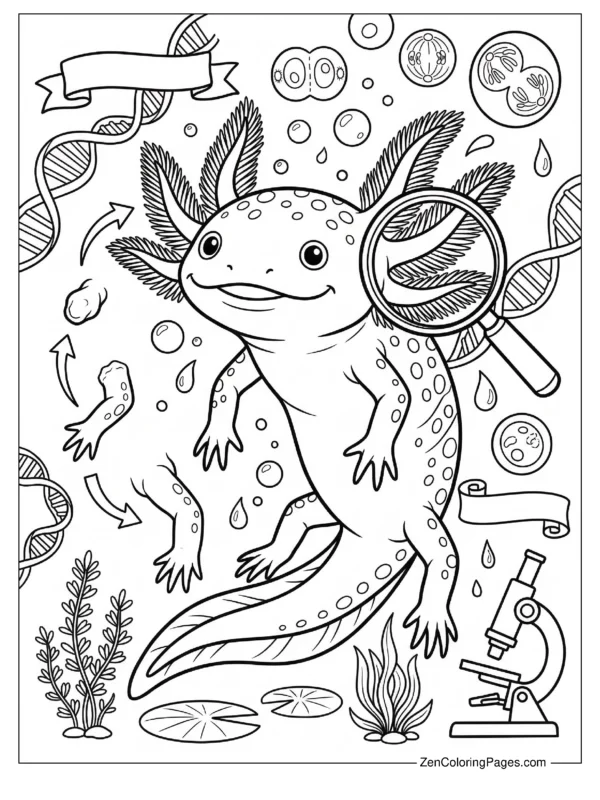
The Axolotl Regeneration Science And Biology Printable ties into this perfectly. It gives kids something concrete to examine while you explain what makes these animals so valuable to medical research. My niece called it their “superhero power,” and she’s not wrong.
Five Color Morphs Kids Can Actually Color
Most people picture axolotls as pink, but wild ones are actually dark brownish-green with gold speckles — that’s the “wild type” morph. The famous pink ones are leucistic, meaning they have pale pinkish-white skin with dark eyes. Then there’s golden albino (yellow-gold with pink eyes), melanoid (solid dark, almost black, with a velvety appearance), and GFP (green fluorescent protein), which literally glows green under blue light because scientists introduced jellyfish DNA into their genome.
Axolotl color comes from three types of pigment cells called chromatophores: melanophores produce brown and black, xanthophores create yellow and orange, and iridophores generate that shiny, reflective quality. Different combinations of these cells — or the absence of them — produce each morph. This is fantastic coloring inspiration because kids can color their axolotls based on real biology. The Easy Wild Type Axolotl page works beautifully with earth tones and gold speckles, while the Leucistic Axolotl Swimming Happily coloring sheet is perfect for soft pinks with dark eyes. Meanwhile, the Golden Albino Axolotl Swimming Near Seaweed page practically calls for yellows and golds, and the Melanoid Axolotl Swimming Through Aquatic Plants page is a chance to experiment with deep blacks and browns.
The “Peter Pan” of Salamanders
What makes axolotls look so unique compared to other amphibians is their neoteny — they keep their juvenile features for life. Most salamanders go through metamorphosis (similar to how tadpoles become frogs), but axolotls skip that step entirely. They retain those feathery external gills, their wide eyes, that permanent little smile, and they stay fully aquatic forever. Scientists sometimes call them the “Peter Pan” salamanders because they literally never grow up. This is also why they’re so fun to draw and color: those signature gills are essentially their defining visual feature.
From Tiny Egg to 9-Inch Adult
The axolotl life cycle is surprisingly straightforward. Females lay anywhere from 300 to 1,000 eggs, attaching them to underwater plants. About two weeks later, tiny larvae hatch out without legs — those develop over the following weeks — and they gradually grow over several months. Adults typically reach about 9 inches, though some can stretch to 12 inches or even larger in rare cases. They reach sexual maturity around 18 months and can live up to 15 years.
Our Axolotl Hatching From An Egg coloring page captures that very first stage beautifully, and the Simple Axolotl Life Cycle Coloring Sheet walks kids through the whole process from egg to adult. Teachers and homeschool parents will find these two pages especially useful for a quick biology lesson. For those who want to go deeper into body parts and features, the Detailed Axolotl Anatomy And Biology Coloring Page rounds out the science collection nicely.
Coloring Tips: How to Color Axolotls by Difficulty Level
Speaking of going deeper, let me share some actual coloring tips that’ll make a real difference depending on which pages you pick. After designing all 40 pages in this collection, I’ve got pretty strong opinions on what works best for each skill level.
Easy Pages (28 Pages, Ages 2-6)
Chunky crayons or washable markers. That’s it. Don’t overthink this one. For toddlers, start with the Simple Axolotl Face Outline Coloring Page because it’s basically just a big friendly face with thick lines. Preschoolers who want something more fun? The Kawaii Axolotl Eating A Strawberry is a hit every time. At this age, let them go wild. One color for the whole thing? Great. Purple axolotl with an orange face? Love it. Staying in the lines doesn’t matter yet.
Medium Pages (12 Pages, Ages 7-12 and Adults)
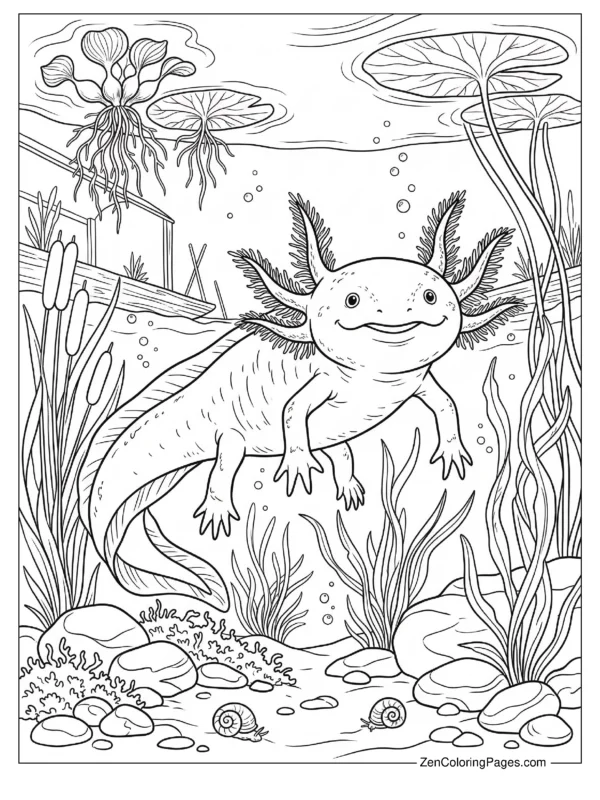
This is where colored pencils and fine-tip markers really shine. Pages like the Realistic Axolotl Swimming In Freshwater Habitat and the Detailed Axolotl Ecosystem With Snails And Plants have enough detail that you can actually practice layering. My tip: start with your lightest colors first, fill the whole area gently, then go back in with darker shades for shadows and depth. It makes a huge difference compared to just pressing hard with one color.
Real Axolotl Color Palettes (Use These!)
Here’s something cool. Axolotls actually come in over 20 color morphs in real life, and I designed specific pages for the most popular ones. So if you want to color them accurately, here’s your cheat sheet. Leucistic morphs (the famous pink ones) have a pale pink body with dark eyes and rosy gills, so grab that page of the Leucistic Axolotl Swimming Happily and go to town with soft pinks. Wild-type axolotls are olive-brown with gold flecks and dark gills, which is what the Detailed Wild Type Axolotl page is perfect for. Golden albinos? Soft yellow body, peach-colored gills, no dark pigment at all. Try that palette on the Golden Albino Axolotl Swimming Near Seaweed. And melanoid morphs are deep charcoal-black with dark gills, so the Melanoid Axolotl Swimming Through Aquatic Plants page basically begs for your darkest pencils.
Or forget all of that and invent your own fantasy morph. Neon green? Galaxy purple? Go for it. If your kids love experimenting with bright, colorful designs, they might also enjoy our rainbow coloring pages for even more vibrant creative fun.
Nailing Those Feathery Gills
The gills are the signature axolotl feature, and they’re the most fun part to color. Here’s the technique I always recommend: use short flicking strokes that radiate outward from the head, like little wisps. Layer two or three shades of pink or red on top of each other for depth. Then — and this is the secret — leave tiny white highlights at the tips of each gill frond. It gives them that wispy, feathery look that makes the whole page pop. Works on both easy and medium pages.
Science Pages: Color to Learn
For the Detailed Axolotl Anatomy And Biology Coloring Page, try this: use a different color for each body part and create a little color key legend in the margin. Red for gills, blue for the dorsal fin, green for the limbs, whatever you want. It turns a coloring page into an actual learning activity, and teachers have told me this works really well for classroom science lessons. Kids remember the anatomy way better when they’ve physically colored and labeled each part themselves.
Creative Ways to Use Axolotl Coloring Pages Beyond Coloring
Coloring these pages is just the starting point. Some of the most rewarding projects parents and teachers have put together use these printables as building blocks for bigger activities. Here are five ideas that extend well beyond crayons.
Build a Science Journal
This activity is a favorite among homeschool families. Print out the Simple Axolotl Life Cycle Coloring Sheet and the Detailed Axolotl Anatomy And Biology Coloring Page, have your kids color them, then paste each one into a science notebook. Next to each page, they write facts about what they colored. Beside the life cycle page, they might note that axolotls never undergo metamorphosis like other amphibians. Next to the anatomy page, they can label the external gills and explain how axolotls breathe through their skin. A single coloring session transforms into a full biology unit on amphibians, and kids retain far more when they physically color and write about a subject versus reading it in a textbook.
Create an Underwater Habitat Diorama
This project consistently impresses. Color and cut out the Axolotl Exploring A Coral Reef, the Detailed Axolotl Ecosystem With Snails And Plants, and the Little Axolotl Hiding In An Anemone pages. Then grab a shoebox, line the inside with blue tissue paper for water, add some green pipe cleaner plants, and glue your colored axolotl cutouts throughout the scene. The result is a 3D underwater diorama that kids are genuinely proud to display. Parents have sent photos of these finished projects, and they look incredible.
Make a Conservation Awareness Poster
Use the Endangered Mexican Axolotl In Xochimilco Canal page as the centerpiece of a classroom poster about endangered species. Kids color it, glue it to poster board, then add hand-written facts around it. According to the IUCN Red List, only 50 to 1,000 adult axolotls remain in the wild, and the species has been classified as Critically Endangered since 2006. Those facts land differently when a child has spent time carefully coloring the animal they are learning about. It makes the conservation message tangible instead of abstract.
Turn Pages Into a Storytelling Adventure
Pick three or four adventure-themed pages — the Axolotl Navigating A Sunken Pirate Ship, Axolotl Exploring Ancient Underwater Mayan Ruins, and Magical Axolotl Glowing In Bioluminescent Caves work perfectly for this. Color all of them, lay them out in order, and then write or narrate a short adventure story connecting the scenes. One child’s axolotl might discover treasure in the pirate ship, then swim through ancient ruins to find a glowing cave. Another child might tell a completely different story with the same pages. It works as a creative writing prompt disguised as an art project, and teachers have found it especially effective for reluctant writers who freeze up staring at a blank page. Kids who love these magical themes can also explore our fantasy coloring pages for even more imaginative adventures.
Play a Color Morph Matching Game
This activity sneaks in some real genetics education. Print two copies each of the Easy Wild Type Axolotl, the Leucistic Axolotl Swimming Happily, the Golden Albino Axolotl Swimming Near Seaweed, and the Melanoid Axolotl Swimming Through Aquatic Plants pages. Color each pair accurately — wild type gets brown and olive tones, leucistic gets white with dark eyes, golden albino gets yellow and gold, melanoid gets deep black. Cut them out and you have a memory matching card game. Kids flip cards trying to find matching morphs, and they naturally start learning the morph names and what makes each one distinct. Real axolotls have four pigmentation genes that create these different color variants, so a simple card game becomes a hands-on genetics lesson. Not bad for something that started as a coloring page.
Are these coloring pages really free?
100%. Every single page is free to download as a high-quality PDF. No email sign-up, no hidden paywall, no “premium version” nonsense. They’re formatted to print cleanly on both US Letter and A4 paper, so they work whether you’re in the US, UK, or anywhere else. Just click, download, print.